


Technical Support
Customer first is our principle. We provide customers with below services in product design:

Sample information consultation & delivery
provide professional advice on specification and selection.
Temperature Evaluation for whole machine design
provide technical support for thermal protection problems faced by customers in the whole machine design and verification stages.
Whole machine failure analysis
provide technical support for risk beyond the temperature protection design range caused by other factors in the whole machine design.
After-sales Service
We provide complete analysis for used products of customers, and also provide consulting assistance
for technical problems faced by customers in the manufacture process and market
Verify the functionality of the thermal cutoffs and thermostats that have been used
Assist customers in judging and analyzing the potential thermal processing risks in the customer's manufacturing process
Assist customers in judging and analyzing the potential mechanical processing risks in the customer's manufacturing process
Download Center
Discover the AUPO brand and products through our downloadable catalogs and regularly updated
resource center—designed to support your evolving industry needs.




General Questions
Can you introduce technical terms of thermal cutoff(TCO)?
The international standard for thermal cutoff (IEC60691) stipulates that thermal cutoff must operate within the rated operating temperature range of +0/-10°C.
Place the thermal cutoff in a constant temperature chamber and raise the chamber temperature to a value 12°C below the rated temperature of the thermal cutoff (TF - 12°C). Then, increase the temperature at a rate of 0.5-1.0°C per minute until the thermal cutoff melts. This melting temperature is the operating temperature of the thermal cutoff. To ensure accuracy, the current applied to the thermal cutoff is maintained below 10mA during measurement.
The maximum temperature that the thermal cutoff can maintain without changing its conductive state for 168 hours when the rated current is applied.
The maximum temperature at which a thermal cutoff can maintain its mechanical and electrical properties without damage at twice the rated voltage for a specified time after switching to the circuit-breaking state.
The maximum current a thermal cutoff can carry.
The maximum operating voltage of a thermal cutoff.
Also known as thermal cutoff, thermal link, and TCO, these terms have the same meaning.
Can thermal cutoff (TCO) be used as current fuse?
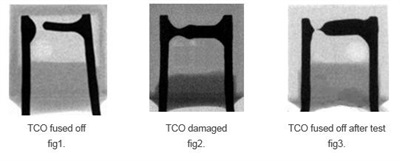
Why there is no conducting of TCO sometime after soldering? Why TCO is found open in testing after soldering or installing? How to avoid these kinds of situations?
This could be caused by the soldering temperature. During soldering process, the ambient temperature of TCO has reached the functioning point. As a result, TCO is vulnerable to fusing off or serious damage. Wrong behaviour are like soldering point too close to TCO body, soldering time too long, soldering temperature too high.
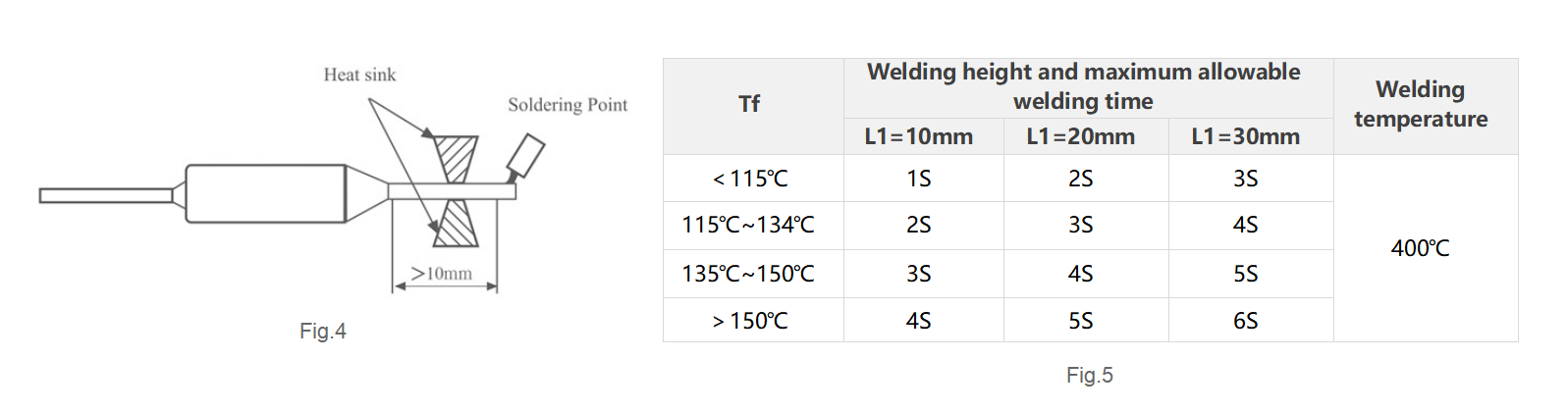
To reduce or avoid the damage to TCO, it is suggested that customers pay attention to the following tips:
1. Distance between the soldering point and TCO body should be at least 10mm. ( As showed in Fig.4)
2. Welding process refers to Fig.5 Welding Time Guide.
3. Soldering fixture should be applied during manual soldering. Such as clipingan aluminum block (or other metals which are good at dissipating the heat) with the lead wires to help dissipate the heat.( As showed in Fig.4)
4. Immerse the lead wires into the cooling liquid (like alcohol) after soldering.
When TCO is riveted, there is no heat source. How could TCO fuse off when the whole appliance is under testing?
Can TCO bear tension or pressure? What is the parameter?
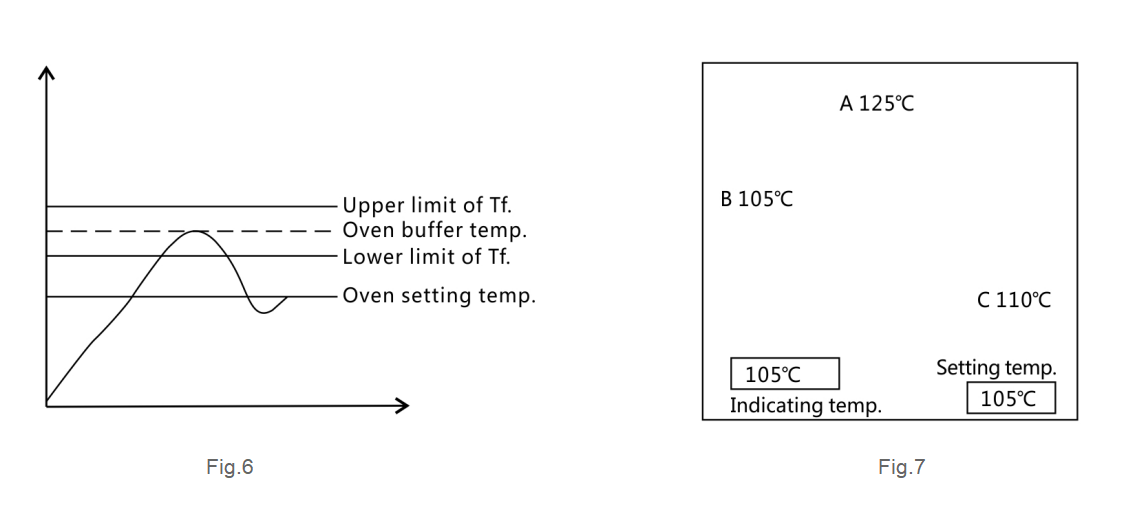
Why do TCO function in large volume when they are applied in the appliances and put in the oven for baking?
1.The buffer temperature created by the heating process of the oven could be very high and cause TCO to function. (Refer to Fig.6)
2.The temperature inside the oven is not uniform. Some positions are high, some are low. (Refer to Fig.7)
3.The air inlet and air outlet are blocked because of the amount is too much. Once holes of oven are blocked, the ventilation will be bad and temperature will get higher in part, which cause TCO to function.
Can TCO be put in the liquid or gas environments?
Why does TCO function during process of heat-shrinkable tubing? How to avoid this kind of situation?
How to test the functioning temperature in IQC?
If you have a silicon oil bath for testing TCO’s functioning temperature. Please pay attention to below tips: 1. The current passing TCO is less than 10mA.2. Put the TCO into the silicon oil bath at a point of Tf-12℃.(For example, TCO of A4-F series should be put into the silicon oil bath when the temperature reach 118℃). You’d better keep the temperature constant for about 30 minutes.
4.The probe should be attached to the TCO as close as possible.
You could use a constant temperature oven with the blowing device to do the test if you don’t have a silicon oil bath. When using a constant temperature oven Please pay attention to:
a. Put the TCO into the silicon oil bath at a point of Tf-12℃. You’d better keep the temperature constant for about 30 minutes.
b. To ensure the accuracy of temperature inside of the oven, you’d better put the TCO into the oven together with a probe.
c. The temperature of silicon oil bath rise at a rate of 0.5-1℃ per minute till the TCO fuse-off.The rate of heating up can not exceed 1℃ per minute after putting in the TCO
How to install TCO to achieve the optimal performance?
1. The TCO body needs to be put close to the heat source. TCO feels the temperature through the body. As the body of TCO (alloy type)has no direct contact with the thermal alloy, it takes more time when the heat from the body transfer to the thermal alloy. The heat transfer rate is slow in the kind of installation. The fusing off action would come in with delay.
2. The lead wires of TCO need to be put close to the heat source or to be connected with the heat source directly. TCO feel the temperature through the lead wires. As the lead wires are connected to the thermal alloy directly, thermal alloy could feel the heat source once the lead wires feel it. Because the lead wires are no insulated, it is suggested that customers to put good heat transfer and good withstand voltage bushing outside of the them.PS: TCO is not allowed to be suspended inside of the equipment.

Laboratory Strength
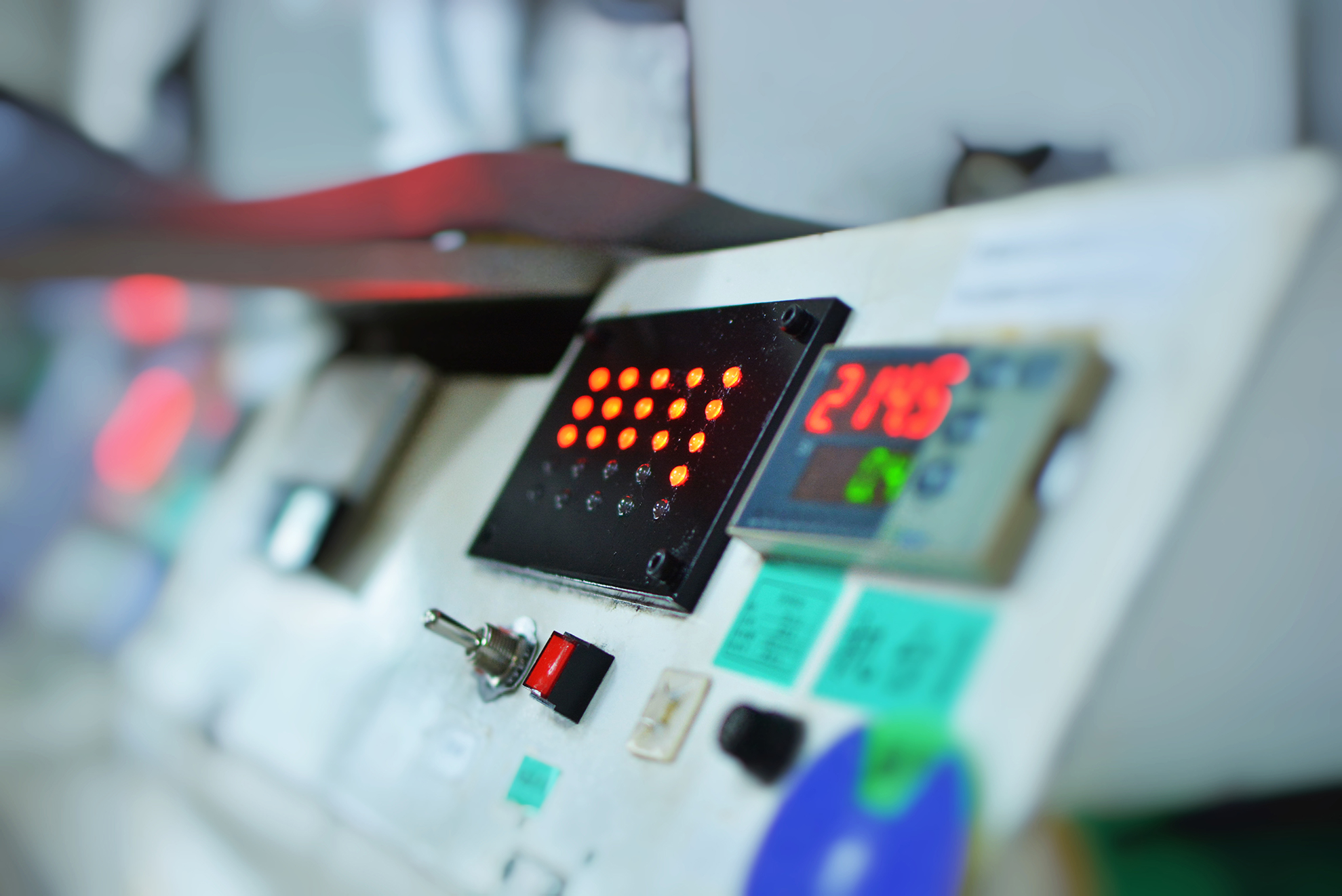

Performance Laboratory
Our Performance Lab conducts rigorous, routine product verification based on AUPO internal standards, as well as international and national standards. Each batch undergoes comprehensive testing, including operating temperature, torque, tensile and compression strength, insulation resistance, dielectric strength, and more.
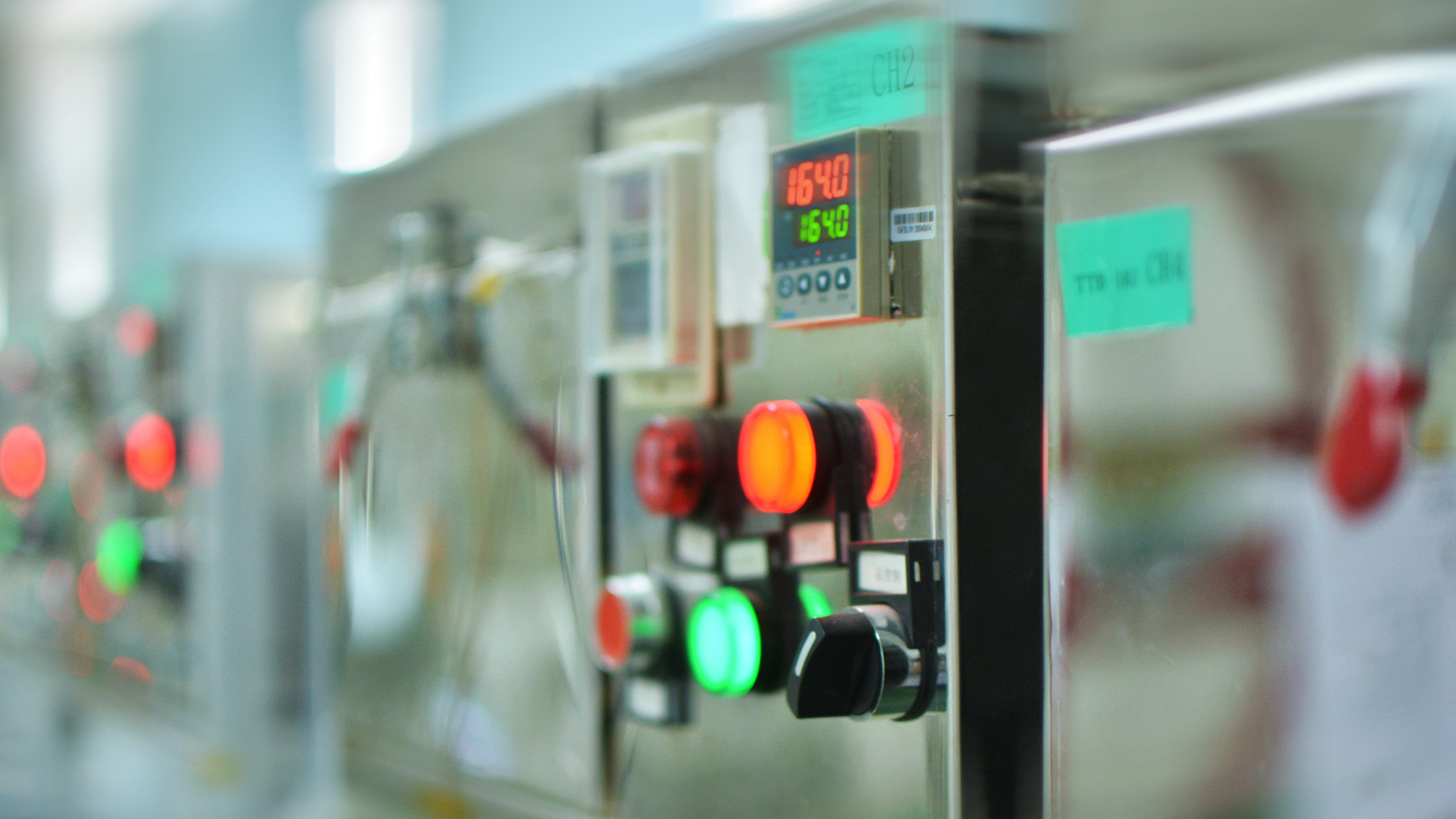
Type Test Laboratory
Type Test Lab performs scheduled validation of product design performance according to AUPO protocols and applicable international/national standards. Test items include rated operating temperature,holding temperature,transient overload current,breaking current, maximum temperature limit,aging, temperature/humidity cycling, extended holding temperature, holding performance with load,thermal shock,and lightning surge testing.
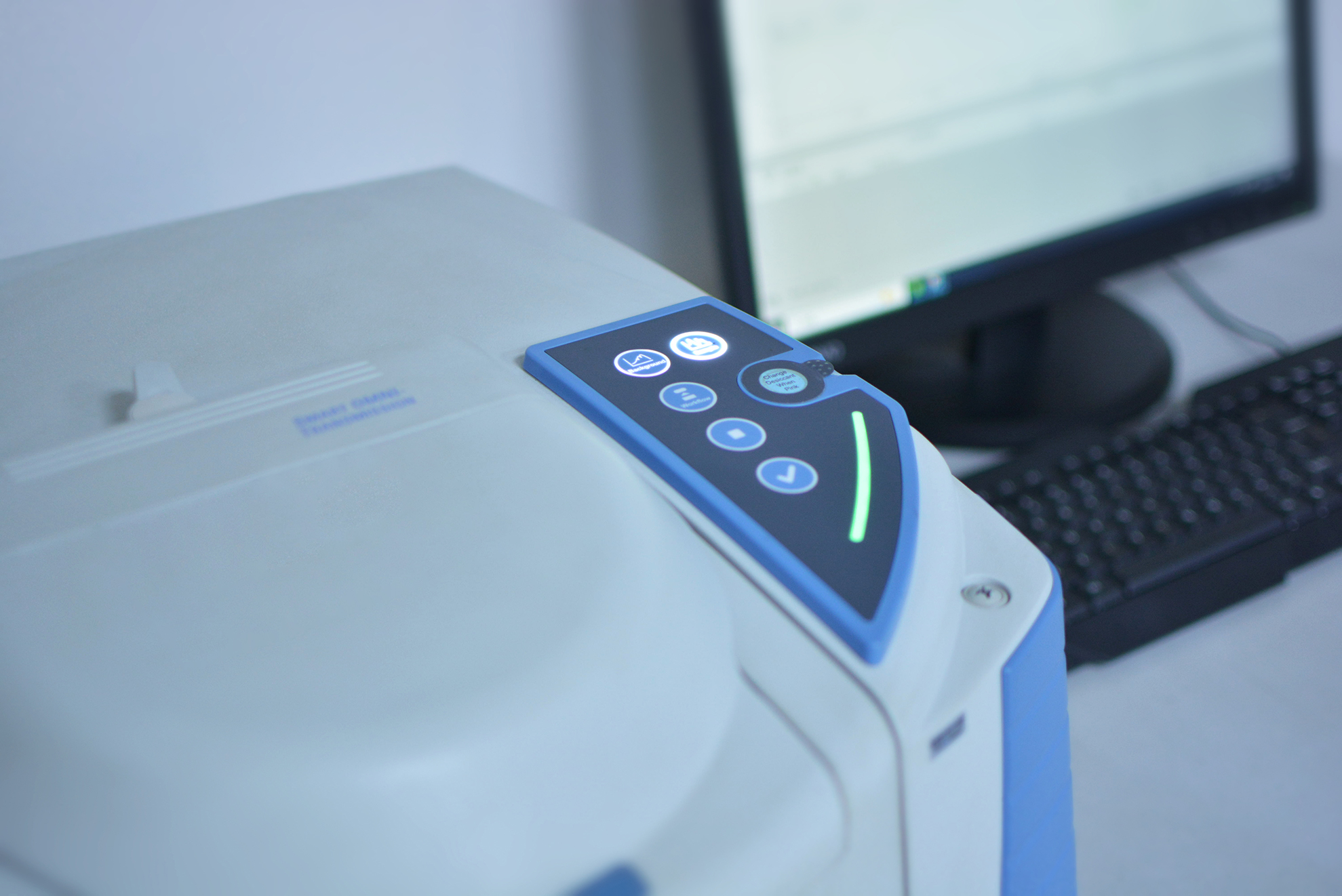
Materials Laboratory
Our Materials Lab conducts in-depth analysis on raw materials, semi-finished products, and customer samples. Testing capabilities include environmentally restricted substances, infrared spectroscopy (FTIR), differential scanning calorimetry (DSC), microscopic melting point, and more.
Standard Introduction
TCO standards
IEC 60691:2023
Thermal-links Requirements and application guide
GB/T 9816.1-2023
Thermal-links 1st Part: Requirements and application guide
GB/T 9816.2-2018
Thermal-links 2nd Part: special requirement of pellet thermal links
IEC 60691:2023
Thermal-links 3rd Part: special requirement of alloy thermal links
UL 60691:2024
Thermal-Links Requirements and Application Guide, Edition 5
Thermostat standard
IEC 60730-1:2022
Automatic electrical controls –Part 1: General requirements
IEC 60730-2-9:2020
Automatic electrical controls for household and similar use - Part 2-9: Particular requirements for temperature sensing controls
IEC 60730-2-22:2014
Automatic electrical controls - Part 2-22: Particular requirements for thermal motor protectors
GB/T 14536.1–2022
Automatic electrical controllers - Part 1: General requirements
GB/T 14536.3–2022
Automatic electrical controllers - Part 3: Special requirements for motor thermal protectors
GB/T 14536.10–2022
Automatic electrical controllers - Part 10: Special requirements for temperature sensitive controllers
UL 60730-1:2016
Automatic electrical controls –Part 1: General requirements
UL 60730-2-9:2021
Automatic electrical controls for household and similar use - Part 2-9: Particular requirements for temperature sensing controls
UL 60730-2-2:2019
Automatic Electrical Controls for Household and Similar Use Part 2: Particular Requirements for Thermal Motor Protectors